
Faculty
Phillip Scott, Ph.D.

School of Veterinary Medicine
380 South University Avenue
Philadelphia, PA 19104-4539
Fax: (215) 746-2294
pscott@vet.upenn.edu

BS (Biology)
Villanova University, Villanova, PA, 1975.
Ph.D. (Parasitology)
University of Pennsylvania, Philadelphia, PA, 1980.
Search PubMed for articles
Immunology graduate group
Cell and Molecular Biology Graduate Group
Description of Research Expertise
Research InterestsT cells and cytokines in infectious disease
Host-pathogen interactions
Development of Th1 and Th2 cells
Memory T cells
Key words: parasites, Leishmania, T cells, Th1 cells, Th2 cells, memory T cells
Dr. Scott's current research is focused on 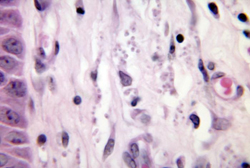
Dr. Scott's laboratory is investigating the role of cytokines, antigen-dose, CD8+ T cells, regulatory T cells and antigen persistence in the development of immunologic memory. Another major interest in this laboratory is to better understand how different species of Leishmania interact with the host immune system, in order to develop new treatments for chronic leishmaniasis. For example, in contrast to L. major infections, infections with L. mexicana fail to resolve in C57BL/6 mice, and the lab has linked this phenotype to a defect in dendritic cell activation following infection. On the other hand, infections with L. braziliensis resolve in BALB/c mice, which are susceptible to both L. major and L. mexicana, and studies are underway to elucidate the factors that promote lesion resolution with this parasite.
Most recently, the Scott lab has begun studies in Brazil, funded by a NIH International Collaborations in Infectious Disease Research (ICIDR) grant, to understand the pathogenesis of L. braziliensis in patients. L. braziliensis can cause disfiguring chronic disease, in spite of the development of a strong immune response and control of the parasites. Thus, the disease is primarily due to immunopathology, including the production of high levels of TNF-α. One type of monocyte (termed proinflammatory monocytes) is known to produce high levels of TNF-α, and this subset is expanded in L. braziliensis patients. The Scott lab is looking at the how these monocytes are regulated during infection.
Selected Publications
Carvalho Lucas P, Petritus Patricia M, Trochtenberg Alyssa L, Zaph Colby, Hill David A, Artis David, Scott Phillip: Lymph node hypertrophy following Leishmania major infection is dependent on TLR9. Journal of immunology (Baltimore, Md. : 1950) 188(3): 1394-401, Feb 2012.Kaye Paul, Scott Phillip: Leishmaniasis: complexity at the host-pathogen interface. Nature reviews. Microbiology 9(8): 604-15, Aug 2011.
Kaye, P., and P. Scott: Leishmaniasis: complexity at the host-pathogen interface. Nat Rev Microbiol 9: 604-615, 2011.
Colpitts, S. L., and P. Scott: The early generation of a heterogeneous CD4+ T cell response to Leishmania major. J Immunol 185: 2416-2423, 2010.
Colpitts, S. L., N. M. Dalton, and P. Scott.: IL-7 receptor expression provides the potential for long-term survival of both CD62Lhigh central memory T cells and Th1 effector cells during Leishmania major infection. J Immunol 182: 5702-5711, 2009.
Ng, L. G., A. Hsu, M. A. Mandell, B. Roediger, C. Hoeller, P. Mrass, A. Iparraguirre, L. L. Cavanagh, J. A. Triccas, S. M. Beverley, P. Scott, and W. Weninger.: Migratory dermal dendritic cells act as rapid sensors of protozoan parasites. PLoS Pathog 2008.
Carvalho, L. P., E. J. Pearce, and P. Scott. : Functional dichotomy of dendritic cells following interaction with Leishmania braziliensis: infected cells produce high levels of TNF-alpha, whereas bystander dendritic cells are activated to promote T cell responses. J Immunol 181: 6473-6480. 2008.
Pakpour, N., Zaph, C., and P. Scott: The central memory CD4+ T cell population generated during Leishmania major infection requires IL-12 to produce IFN-gamma. Journal of Immunology 180(12): 8299-8305, June 2008.
Uzonna, Jude E. Joyce, Karen L. Scott, Phillip.: Low dose Leishmania major promotes a transient T helper cell type 2 response that is down-regulated by interferon gamma-producing CD8+ T cells. Journal of Experimental Medicine 199(11): 1559-66, Jun 7 2004.
Zaph, Colby. Uzonna, Jude. Beverley, Stephen M. Scott, Phillip.: Central memory T cells mediate long-term immunity to Leishmania major in the absence of persistent parasites.[see comment]. Nature Medicine 10(10): 1104-10, Oct 2004.
© The Trustees of the University of Pennsylvania | Site best viewed in a supported browser. | Site Design: PMACS Web Team.