


Zhe Lu, MD, PhD
Professor of Physiology
Department: Physiology
Graduate Group Affiliations
Contact information
664 Clinical Research Building
415 Curie Boulevard
Philadelphia, PA 19104-6085
415 Curie Boulevard
Philadelphia, PA 19104-6085
Office: (215) 573-7711
Fax: (215) 573-1940
Fax: (215) 573-1940
Email:
zhelu@pennmedicine.upenn.edu
zhelu@pennmedicine.upenn.edu
Publications

Education:
M.D.
Beijing Medical University, 1986.
M.S. (Physiology)
University of Wisconsin, 1989.
Ph.D. (Physiology)
University of Wisconsin, 1992.
M.D.
Beijing Medical University, 1986.
M.S. (Physiology)
University of Wisconsin, 1989.
Ph.D. (Physiology)
University of Wisconsin, 1992.
Links
Search PubMed for articles
Cell and Molecular Biology graduate group faculty webpage.
Biochemistry and Molecular Biophysics graduate group faculty webpage.
Neuroscience graduate group faculty webpage.
Search PubMed for articles
Cell and Molecular Biology graduate group faculty webpage.
Biochemistry and Molecular Biophysics graduate group faculty webpage.
Neuroscience graduate group faculty webpage.
Post-Graduate Training
Research Fellow, Department of Neurobiology, Harvard Medical School, 1992-1996.
Permanent linkResearch Fellow, Department of Neurobiology, Harvard Medical School, 1992-1996.
Description of Research Expertise
Research InterestsMechanism of ion channels and pathogenesis of channelopathy
Key words: Ion channels, cystic fibrosis, regulation of insulin secretion, phospholipase, inhibitor.
Description of Research
Our laboratory investigates both the fundamental mechanisms of ion channels and the pathogenesis of ion channel-based genetic diseases such as cystic fibrosis and diabetes, and develops novel pharmacological agents to control the activity of specific types of ion channels. Ion channels are a class of highly specialized membrane proteins that allow ions to flow across the cell membrane in a selective manner. The opening and closing of ion channels are precisely regulated by the intricate cell signaling system. Ionic currents through ion channels generate electrical voltage across the cell membrane which underlies the electrical impulses in nerve, muscle and endocrine cells.
Currently, we are studying three types of ion channels, i.e., potassium channels, the cGMP-gated cation channel, and the cystic fibrosis conductance regulator chloride channel. Using a combined structural and functional approach, we investigate the mechanisms underlying the ability of potassium channels to perform various important biological tasks, such as generating action potentials, modulating the communications between neurons, controlling the rate of the cardiac pacemaker, and coupling the blood glucose level to insulin secretion. We also examine the mechanisms that enable the cGMP-gated channel to mediate visual photo-transduction in the eye. Recently, we have ventured into the area of how phospholipases regulate ion channel function, a venture that has provided us with new insight into the pathogenesis of cystic fibrosis. Another area of our research is to develop novel protein inhibitors for various types of biologically important ion channels through both passive screening and active protein design-and-engineering. Using the thermodynamic mutant cycle analysis, we examine the molecular mechanisms of channel inhibition, mechanisms that give rise to the molecular specificity between a given inhibitor and its targeting channel.
Rotation Projects
Rotating students will participate in the investigations of structure-function of ion channels and pathogenesis of channelopathy. The projects will involve molecular biological, protein-biochemical and electrophysiological techniques such as single-channel patch-clamping, single-molecule fluorescence-imaging, membrane protein crystallography, isothermal titration calorimetry, expression of recombinant membrane proteins, gene construction and mutagenesis, histopathology, and/or transgenic animal studies.
Lab personnel:
David Combs, M.D., Ph.D student
Valentina Dimitrova, Ph.D. student
John Lewis, Ph.D. Post-doctoral Associate
Victor Pau, Ph.D. Post-doctoral Associate
Yajamana Ramu, Ph.D. Research Investigator
Marriane Shin, Ph.D. Research Specialist
Andrew Thomson, Ph.D. Post-doctoral Associate
Yanping Xu, M.D., Ph.D. Research Investigator
Jayden Yamakaze, M.S. Research Technician
Fenny Zhou, Ph.D. Research Investigator
Selected Publications
Xu, Y. Ramu, Y, Shin, H.-G., Yamakaze, J, Lu, Z: Energetic role of the paddle motif in voltage gating Shaker K+ channels. Nature Structural and Molecular Biology 20: 574-581, 2013.Lin, C.-C. Baek, K, Lu, Z.: Apo and InsP3-bound crystal structures of the ligand-binding domain of an InsP3 receptor. Nature Structural and Molecular Biology 18: 1172–1174, 2011.
Xu, Y., Ramu, Y., Lu., Z.: A Shaker K+ Channel with a Miniature Engineered Voltage Sensor. Cell 142: 580-589, 2010.
Xu, Y., Szép, S., Lu, Z.: The antioxidant role of thiocyanate in the pathogenesis of cystic fibrosis and other inflammation-related diseases. Proceedings of National Academy of Sciences (U.S.A.) 106: 20515-20519, 2009.
Xu, Y., Shin, H. Szép, S., Lu, Z.: Physical determinants of strong voltage sensitivity of K+ channel block. Nature Structural and Molecular Biology 16: 1252 – 1258, 2009.
Ramu, Y., Xu, Y., Lu, Z.: Engineered specific and high-affinity inhibitor for a subtype of inward-rectifier K+ channels. Proceedings of National Academy of Sciences (U.S.A.) 105: 10774-10778, 2008.
Xu, Y., Ramu, Y., Lu, Z.: Removal of phospho-head groups of membrane lipids immobilizes voltage sensors of K+ channels. Nature 451: 826-829, 2008.
Ramu, Y., Xu, Y., Lu, Z.: Inhibition of CFTR Cl- channel function caused by enzymatic hydrolysis of sphingomyelin. Proceedings of National Academy of Sciences (U.S.A.) 104: 6448-6453, 2007.
Ramu, Y., Xu, Y., Lu, Z.: Enzymatic activation of voltage-gated K+ channels. Nature 442: 696-699, 2006.
Lu, Z., Klem, A.M., Ramu, Y.: Ion conduction pore is conserved among K+ channels. Nature 413: 809-813, 2001.

Contact us
Institute for Diabetes, Obesity and Metabolism
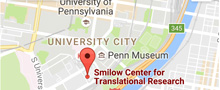
Smilow Center for Translational Research
3400 Civic Center Boulevard, 12th Floor
Philadelphia, PA 19104
Phone: 215-898-0198 | Fax 215-898-5408

Directions
© Trustees of the University of Pennsylvania