


Latest News
2026 Frontiers of Knowledge Award - Biology and Biomedicine 18th Edition
 The BBVA Foundation Frontiers of Knowledge Award in Biology and Biomedicine has gone in this eighteenth edition to Carl H. June (University of Pennsylvania) and Michel Sadelain (Columbia University) for revolutionizing the treatment of cancer by means of CAR-T cell immunotherapy.
BIO
Carl H. June (Denver, United States, 1953) graduated with a BS in Biology from the United States Naval Academy in 1975, and received his medical degree from Baylor College of Medicine in 1979. He specialized in Internal Medicine at the National Naval Medical Center in Bethesda (1980-1983) and in Oncology at the Fred Hutchinson Cancer Center-University of Washington (1983-1985). He then returned to Bethesda, where he founded the Immune Cell Biology Program at the Naval Medical Research Center and headed the Department of Immunology from 1990 to 1995. During this time, he was also a Professor of Medicine and of Cell and Molecular Biology at the Uniformed Services University of the Health Sciences (1995-1999). In 1999, he joined the Perelman School of Medicine at the University of Pennsylvania, where he is currently the Richard W. Vague Professor in Immunotherapy, Director of the Center for Cellular Immunotherapies, and Director of the Parker Institute for Cancer Immunotherapy. Author of over 350 publications, among his many distinctions he is an elected member of the American Academy of Arts and Sciences.
CONTRIBUTION
Carl June was researching potential treatments for AIDS patients at the University of Pennsylvania when he achieved an important milestone in the clinical development of CAR-T cells. He had developed an interest in immunology while studying medicine in the 1970s, spurred by the fact that his own mother had an autoimmune condition, common among members of her family. After the advances made by Sadelain on the experimental plane, it was time to establish whether cell therapy could also work in human patients, with some researchers concerned that their immune systems would attack and kill the CAR-T cells. In the mid 1990s, June showed that T cells modified to stave off infection with HIV could not only survive in the human body, but could do so long enough to trigger immune responses. This quality of persistence, critical for attacking cancer over time, opened the door to the first clinical trials with CAR-T cells in leukemia patients.
Around that time, June’s first wife fell ill with ovarian cancer aged just 41 and sadly died seven years later. Getting the new therapeutic strategy into trials in human oncological patients accordingly became “the number one thing” in the researcher’s life. It was finally in 2010 that the first two patients, with very late stage leukemia, signed up for what was then a highly experimental trial of June’s own design, with each receiving an infusion of CAR-T cells. This would be the first application in a clinical setting of the findings developed in Sadelain’s lab and tried with success in animal models.
June recalls his amazement at seeing that the treatment achieved better results in humans than it did in experiments run on rodents: “We cured a lot of mice, but the major surprise was that the therapy worked even better in humans. Remarkably, our first patient was cured with a single infusion and for ten years still had CAR-T cells in his body, although he later died of COVID-19. The second patient is still alive and continues to have CAR-T cells in his body. We never thought it would work so effectively.”
“June and Sadelain have brought about a paradigm shift in modern medicine with the development of CAR-T cell immunotherapy. Their work has profoundly transformed the fields of oncology and immunology, to the extent that they are considered the fathers of the first ‘living drug’ in medical history. Unlike traditional drugs, which are metabolized over time and require repeat doses, CAR-T cells comprise the patient’s own cells, which, after being genetically modified to selectively recognize and destroy tumor cells, can persist and function in the body for years, such that a single dose can provide lasting protection. Genetic engineering provides a level of precision that chemotherapy cannot achieve. While the latter acts in a non-selective manner, CAR-T cells attack only the target cells and leave healthy tissue untouched,” explains Antonio Pérez-Martínez, Head of the Pediatric Hemato-Oncology Department at Hospital Universitario La Paz and another nominator of the winning entry.
2026 - The 13th Annual Ross Prize in Molecular Medicine
The 13th Annual Ross Prize Symposium will be held on June 11 in New York City
The Feinstein Institutes for Medical Research has selected Carl H. June, MD, from the University of Pennsylvania Perelman School of Medicine, and Michel Sadelain, MD, PhD, from Columbia University, to receive the 13th annual Ross Prize in Molecular Medicine. The Prize will be presented on June 11, in conjunction with The New York Academy of Sciences (NYAS), at The Cure, 345 Park Ave. S in Manhattan.

Lifetime Achievement Award - SSDS 2026

Disrupters of the Year, Annual Citizen of the Year Awards

Disrupters: Dr. Carl June and Jeff Marrazzo, presented by banker, historian and CMG Co-founder and Honorary Trustee Richard Vague
When June’s Penn laboratory developed CAR-T cells, the first FDA-approved gene therapy, they helped save thousands of patients from leukemia and lymphoma. Now, with the help of co-founder Marrazzo, Dispatch Biotherapeutics is turning their attention to the next frontier: using CAR-T cells to attack solid tumors, without harming healthy tissue.
“Science is never a solo sport,” June said. “Breakthroughs like CAR-T universal cancer treatments don’t happen in a vacuum. They require a society that values, that treats, and that invests in fundamental science research. That believes in facts.”
“We had a motto, which was, we don’t follow footsteps, we create a path, because real disruption is never done alone. It is always done together,” Marrazzo added.
Best Leaders 2025: Carl H. June

 The man who dares to cure cancer.
Best Leaders 2025: Carl H. June | U.S. News Best Leaders | U.S. News
Carl H. June - 2025 Balzan Prize for Gene and Gene-Modified Cell Therapy
 Carl June invented and developed a genetically modified cellular therapy which has cured patients with fatal haematological malignancies (leukaemias, lymphomas and myelomas). He developed chimeric antigen receptor bearing T cells (CAR-T cells) by genetically engineering three distinct modules: an extracellular target binding module, a transmembrane module that anchors the molecule into the cell membrane, and an intracellular signaling module that transmits activation signals. The incorporation of co-stimulatory properties within the antigen receptor itself proved to be a critical advance in the development of CAR-T cells. By developing adoptive cell therapy and creating chimeric T cells that redirect cytotoxic T cells to kill cancer cells, June has devised a fundamentally new strategy for treating cancer. CAR-T cells are the first therapy predicated on cell engineering using the principles of synthetic biology to enter the practice of medicine.
The discovery and development of CAR-T cells have had a broad impact in medicine. The work of Carl June spurred a wave of academic and industrial efforts to generate new versions of engineered T cells. Carl June himself contributed to these refinements by developing CAR-T cells which produce cytokines to activate other cells of the immune system. The principle he invented is being used to genetically engineer other cell types such as macrophages, NK cells and CIK cells.
The impact of his contribution extends beyond the treatment of haematologic malignancies. Engineered and targeted CAR-T cells hold promise to contribute to the treatment of some solid cancers. Moreover, there is promise that CAR-T cells may be useful in the therapy of autoimmune diseases such as Systemic Lupus Erythematosus by resetting the immune system. Thus, the pioneering work of Carl June has paved the way for the entry of synthetic biology and cellular therapies in the medical armamentarium.
Carl H. June - Fondazione Internazionale Premio Balzan
2025 Merkin Prize in Biomedical Technology awarded to pioneers of CAR T-cell therapy
The winners are Carl June, Bruce Levine, Isabelle Rivière, and Michel Sadelain, who developed technology that reprograms patients’ immune systems to target cancer, leading to several FDA-approved treatments given to over 45,000 cancer patients, including many who had exhausted all other options and thousands who experienced remissions.
Four biomedical innovators — Carl June, Bruce Levine, Isabelle Rivière, and Michel Sadelain — have been jointly awarded the 2025 Richard N. Merkin Prize in Biomedical Technology for developing chimeric antigen receptor (CAR) T-cell therapy, a groundbreaking form of personalized cancer immunotherapy that turns T cells into tumor killers and has led to durable remissions in tens of thousands of patients with previously incurable blood cancers.
The $400,000 prize, to be shared among the four winners, recognizes their role in creating and advancing a technology that has reshaped how physicians treat leukemia, lymphoma, and multiple myeloma, and is now showing promise in treating autoimmune and infectious diseases. In CAR T-cell therapy for cancer, a patient’s own immune cells are removed from their body, reprogrammed to attack tumor cells, and infused back in. More than 45,000 cancer patients worldwide have been treated with the therapy, extending their lives and, in many cases, delivering complete and sustained remissions to people who had exhausted all other options.

Penn Medicine’s Carl June, MD, to Receive 2024 Breakthrough Prize in Life Sciences
 CAR T cell therapy pioneer Carl June, MD, the Richard W. Vague Professor in Immunotherapy in the Perelman School of Medicine at the University of Pennsylvania and director of the Center for Cellular Immunotherapies (CCI) at Penn Medicine’s Abramson Cancer Center, has been named a winner of the 2024 Breakthrough Prize in Life Sciences for the development of chimeric antigen receptor (CAR) T cell immunotherapy, a revolutionary cancer treatment approach in which each patient’s T cells are modified to target and kill their cancer cells. The invention sparked a new path in cancer care, harnessing the power of patients’ own immune systems, a once-elusive goal that brought fresh options for those who could not be successfully treated with conventional approaches.
Cancer cell therapy pioneer Carl June receives the 2020 Sanford Lorraine Cross Award
World-renowned cancer cell therapy pioneer Carl June, the Richard W. Vague Professor in Immunotherapy in the department of Pathology and Laboratory Medicine in the Perelman School of Medicine and director of the Center for Cellular Immunotherapies at Penn’s Abramson Cancer Center, received the $1 million Sanford Lorraine Cross Award for his groundbreaking work in developing chimeric antigen receptor (CAR) T cell therapy.
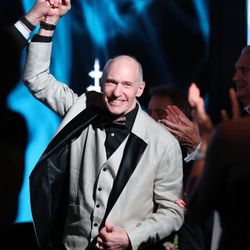
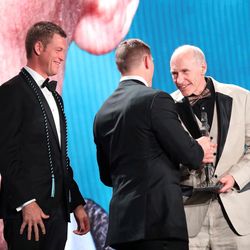

Penn Medicine cancer cell therapy pioneer Carl June named 2021 Dan David Prize Laureate
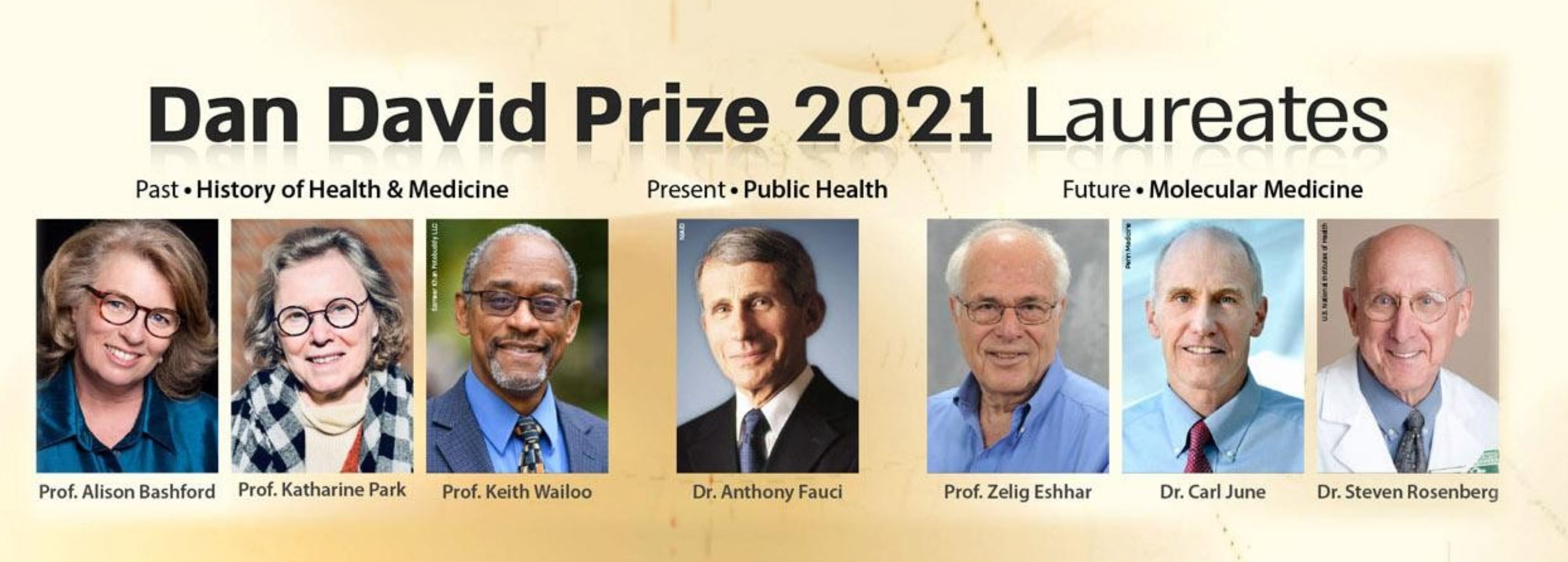
International cancer cell therapy pioneer Carl June, the Richard W. Vague professor in Immunotherapy in the department of Pathology and Laboratory Medicine in the Perelman School of Medicine at the University of Pennsylvania and director of the Center for Cellular Immunotherapies at Penn’s Abramson Cancer Center, has been named a 2021 Dan David Prize Laureate.
The Dan David Prize is endowed by the Dan David Foundation, headquartered at Tel Aviv University, which annually awards three prizes of $1 million each to globally inspiring individuals and organizations, honoring outstanding contributions that expand knowledge of the past, enrich society in the present, and promise to improve the future of the world.
https://penntoday.upenn.edu/news/penn-medicine-cancer-cell-therapy-carl-june-2021-dan-david-prize
Penn Medicine's Carl June Receives 2018 Albany Prize
August 15, 2018
June is recognized for his work in pioneering the development of CAR T therapy for cancer

PHILADELPHIA – Carl June, MD, a gene therapy pioneer at the Abramson Cancer Center of the University of Pennsylvania, will receive the 2018 Albany Medical Center Prize in Medicine and Biomedical Research. June is receiving the award for his pioneering work in developing CAR T therapy, which became the nation's first FDA-approved personalized cellular therapy for cancer in August 2017 and was approved for additional indications earlier this year. The prize will be awarded during a celebration on Wednesday, Sept. 26, in Albany, New York.
Albany Medical Center has given out the $500,000 award annually since 2001 to those “who have altered the course of medical research” and is one of the largest prizes in medicine and science in the United States, according to the organization. June is one of three scientists who will receive this year’s award. The others are Steven A. Rosenberg, MD, PhD, chief of the Surgery Branch of the Center for Cancer Research at the National Cancer Institute, and James P. Allison, PhD, chair of Immunology at the University of Texas MD Anderson Cancer Center.
CAR T Receives FDA Approval!!
9/28/2017
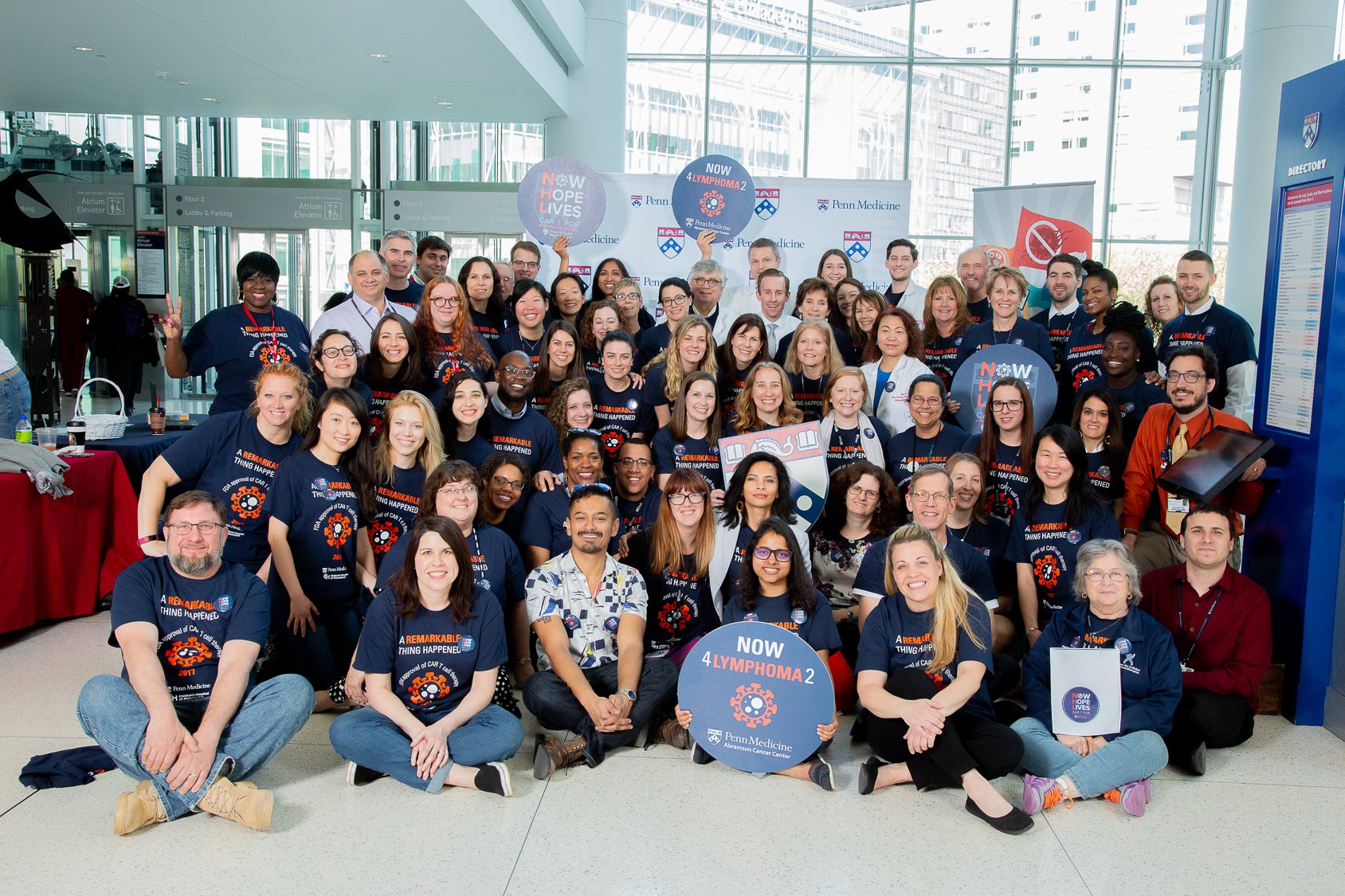
Now4Lymphoma2- FDA APPROVES KYMRIAH FOR TREATMENT OF LYMPHOMA!
5/1/2018
Congratulations to Stephen J. Schuster, MD, the Robert and Margarita Louis-Dreyfus Professor in Chronic Lymphocytic Leukemia and Lymphoma Clinical Care and Research and Director of the Lymphoma Program at Penn’s Abramson Cancer Center and Carl June for recent FDA Approval of Kymriah for Lymphoma!
Full article available to learn more about these recent advancements