



Home
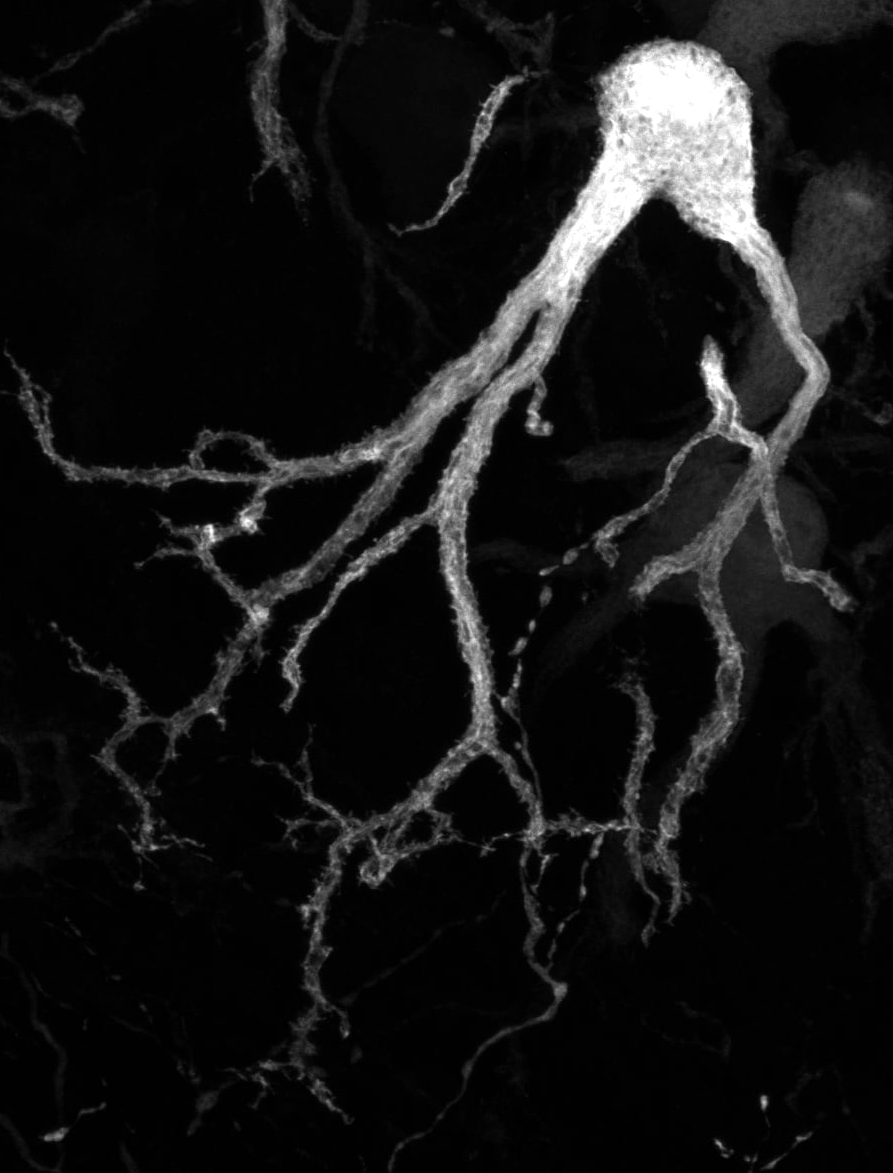
Our lab uses a combination of anatomical and electrophysiological techniques to study neurons in the central auditory system that encode timing cues in auditory stimuli. We study circuits across the auditory system, but have a particular interest in cells in the mammalian brainstem called octopus cells. Octopus cells have long, tentacle-like dendrites that all point in the same direction, inspiring anatomists to name them after octopuses.
QUESTIONS
Understanding how neural circuits develop can shape hypotheses about the anatomical and physiological mechanisms that underlie adult function.
How do specialized neurons like octopus cells refine the morphological and biophysical properties needed to make computations about timing?
What are the molecular and functional consequences of dysfunction, disorder, or injury on a specialized cell population that requires anatomical and synaptic stability?
APPROACHES
- Genetic models allow us to target, visualize, and manipulate auditory circuits to investigate how they develop.
- Anatomical reconstructions and circuit mapping set the foundation for what computations the circuit can make.
- Whole-cell patch-clamp recordings in vitro combined with optogenetic and chemogenetic manipulations reveal intrinsic physiological and synaptic properties.
Latest News
-
First Graduate student!
Monday, May 4, 2026
Rakshita Balaji is officially joining our team and will be completing her thesis work with the Kreeger Lab!
-
Congratulations Julian!
Friday, April 24, 2026
Julain Caesar was awarded the Spring 2026 Mary L. And Matthew S. Santirocco College Alumni Society Undergraduate Research Grant for his work on the inhibitory inputs to octopus cells. Congratulations on this well-earned honor.
-
Welcome Rakshita Balaji and Allison Fultz!
Wednesday, April 22, 2026
Rakshita Balaji and Allison Fultz are NGG graduate students who will be rotating with us this spring!