


Katalin Susztak, MD, PhD
Willard and Rhoda Ware Professor of Diabetes and Metabolic Diseases IV
Department: Medicine
Graduate Group Affiliations
Contact information
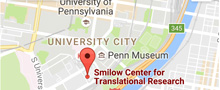
12-123 Smilow Center for Translational Research
3400 Civic Center Blvd
Philadelphia, PA 19104
3400 Civic Center Blvd
Philadelphia, PA 19104
Office: 215 898 2009
Lab: 215 898 2008
Lab: 215 898 2008
Publications

Education
MD
Semmelweis University, Medical School, Budapest, Hungary, 1995.
PhD
Semmelweis University, Medical School, Budapest, Hungary, 1997.
MS
Albert Einstein College of Medicine, Bronx, NY, 2004.
MD
Semmelweis University, Medical School, Budapest, Hungary, 1995.
PhD
Semmelweis University, Medical School, Budapest, Hungary, 1997.
MS
Albert Einstein College of Medicine, Bronx, NY, 2004.
Post-Graduate Training
Intern, Internal Medicine, Albert Einstein College of Medicine, Bronx, NY, 1997-1998.
Resident, Internal Medicine, Albert Einstein College of Medicine, Bronx, NY, 1998-2000.
Clinical & Research Fellow, Nephrology, Department of Medicine, Division of Nephrology, Albert Einstein College of Medicine, Bronx, NY, 2000-2003.
Permanent linkIntern, Internal Medicine, Albert Einstein College of Medicine, Bronx, NY, 1997-1998.
Resident, Internal Medicine, Albert Einstein College of Medicine, Bronx, NY, 1998-2000.
Clinical & Research Fellow, Nephrology, Department of Medicine, Division of Nephrology, Albert Einstein College of Medicine, Bronx, NY, 2000-2003.
Description of Research Expertise
Research InterestWe want to know why kidneys fail, and we intend to stop it. We work at the intersection of human genetics, single-cell and spatial genomics, and artificial intelligence.
Research Details
Chronic kidney disease affects more than 850 million people worldwide, more than diabetes and more than cancer. It consumes nearly one in five Medicare dollars, it is among the fastest rising causes of death on earth, and its burden falls hardest on people of recent African ancestry. For most of the last century, nephrology diagnosed this disease with a blood test invented in the 1920s and explained it with the word "fibrosis." Our laboratory exists to change that. Our ambition is to make kidney medicine molecular, predictive, and equitable.
From a letter in the genome to a medicine. A statistical association is not biology, so we built what was missing. We led the largest and most ancestrally diverse genome-wide association studies of kidney function, identifying more than 1,000 risk loci, and created the first kidney-specific functional atlas of transcriptomes, epigenomes, chromatin accessibility, and proteomes from nearly 5,000 deeply phenotyped human kidneys. Layering one onto the other yields a kidney genetic scorecard that names the causal gene, the responsible cell type, and the druggable pathway. This locus to gene to cell to mechanism to therapy paradigm has given the field new disease genes, among them MANBA, DPEP1, DACH1, ACSS2, TET2, CHAC1, WHAMM, LACTB, KDM1A, and APOL1.
Artificial intelligence and kidney foundation models. Biology is now generating data faster than any human can interpret, and we consider this the central opportunity of the next decade. Our laboratory builds the models that read these data. With our computational collaborators we developed deep learning methods for single-cell analysis, including DESC for batch-corrected clustering and ItClust for transfer learning across datasets, and we extended them into space with iStar, which reconstructs tissue architecture at near-single-cell resolution from histology images, Niche-DE for context-dependent cell-cell interactions, CellANOVA for recovering biological signal lost in batch integration, and S2-omics for intelligent selection of the tissue regions worth profiling. We built self-supervised models that learn kidney pathology directly from unlabeled biopsy images and extract prognostic information that human pathologists cannot see, and CellSpectra and SISKA, which convert a patient's biopsy into an individual molecular report card.
Our current work centers on Nephrobase Cell+, a multimodal single-cell foundation model for kidney biology, trained across our atlases to reason over transcriptomes, chromatin, spatial context, and histology at once. The goal is a model that can predict how a given kidney cell will respond to a genetic variant, an injury, or a drug, and that can read a patient's biopsy and forecast their trajectory. Alongside it we are developing Pixel2Gene and UTOPIA for virtual spatial transcriptomics with calibrated confidence, and HistoSweep for quality control of gigapixel pathology images. We believe the future of nephrology is a model that has seen more kidneys than any physician ever could.
Metabolism, inflammation, and APOL1. Guided by human data, we showed that impaired fatty acid oxidation and mitochondrial dysfunction in tubule cells are early and causal drivers of fibrosis, and that metabolic failure ignites inflammation through mitochondrial DNA release and cytosolic nucleotide sensing. Chronic kidney disease is not passive scarring; it is an active and potentially reversible disorder of cellular energetics. In parallel, we turned one of the starkest disparities in medicine into a druggable target: we built the first inducible, podocyte-specific mouse models proving that the APOL1 G1 and G2 variants are pathogenic, showed that APOL1 also injures endothelial cells, and derived a nine-protein proteomic risk score that predicts kidney failure with a time-dependent AUC of 86.5 percent.
We build what the field needs, and then we give it away. We founded the multi-site TRIDENT consortium and co-founded the Penn/CHOP Kidney Innovation Center. Our assays forecast a 40 percent decline in kidney function three years before it happens, and they are already shortening clinical trials. Our atlases, models, and open-source tools have been downloaded more than 80,000 times and are freely available at susztaklab.com.
Who thrives here
Our laboratory sits at an unusual intersection: human genetics, single-cell and spatial genomics, machine learning, mouse physiology, and a working kidney clinic, all under one roof. Trainees arrive as geneticists, computational scientists, molecular biologists, or physicians, and they leave fluent in more than one of these languages. We give them a real question, a real dataset, and first authorship. Since 2005 more than 40 graduate students and fellows have trained here, and over a dozen now lead their own laboratories.
If you want to work on a disease that affects a tenth of humanity, with the tools to actually solve it, come talk to us.
Rotation Projects
There are several, spanning human genetics, single-cell and spatial genomics, AI and foundation model development, and mouse models. Please speak with Dr. Susztak.
Current Lab Members
Matthew Choi — Research Specialist
Mohammed Alduleimmee- Research Coordinator
Niall Hossein- Research Specialist
Yitian Ma-Programmer
Sofie Du, MD, PhD — Postdoctoral Fellow
Bernhard Dumoulin, MD — Postdoctoral Fellow
Jie Guan, PhD — Postdoctoral Fellow
Yanjuan Hou, MD — Postdoctoral Fellow
Chaelin Kang, PhD — Postdoctoral Fellow
Jonathan Levinsohn, MD, PhD — Instructor
Chenyu Li, MD, PhD — Postdoctoral Fellow
Shen Li, MD, PhD — Postdoctoral Fellow
Victor Martinez, MD — Nephrology Fellow
Samer Mohandes, MD — Instructor of Medicine
Siyu Pan, PhD — Postdoctoral Fellow
Jessie Zhou, PhD — Postdoctoral Fellow
Shinya Taguchi MD, PhD- Postdoctoral Fellow
Elias Ziyadeh — Undergraduate Student
Matthew Wun- Graduate Student
Hanyin Yan- Graduate Student
Shun Bian- Graduate Student
Selected Publications
Dumoulin B, Levinsohn J, Klötzer KA, Li C, Mao L, Ha E, Mohandes S, Nguyen T, Paruzzo L, Hirohama D, … Kaestner KH, Ruella M, McAllister FE, Hakimi AA, Li M, Palmer M, Wherry EJ, Hunter CA; TRIDENT Consortium; Susztak K. Spatial atlas of diabetic kidney disease reveals a B cell-rich disease subgroup. Nature. 2026 Apr 29. PMID: 42056516
Liu H, Abedini A, Ha E, Ma Z, Sheng X, Dumoulin B, Qiu C, Aranyi T, Li S, … Hung AM, Susztak K; Regeneron Genetics Center; Penn Medicine BioBank. Kidney multiome-based genetic scorecard reveals convergent coding and regulatory variants. Science. 2025 Feb 7;387(6734):eadp4753. PMID: 39913582
Isnard P, Makinistoglu MP, Leibovici M, Levinsohn J, … Susztak K, Terzi F, Pontoglio M. HNF1B integrates signals in a feed-forward loop driving kidney disease progression. Science. 2026 Apr 16;392(6795):eaea3219. PMID: 41990178
Park J, Shrestha R, Qiu C, Kondo A, Huang S, Werth M, Li M, Barasch J, Susztak K. Single-cell transcriptomics of the mouse kidney reveals potential cellular targets of kidney disease. Science. 2018;360:758-63.
Li C, Richards SM, Quinn G, Abedini A, Zhu M, Verma T, Mohandes S, … Rader DJ; Penn Medicine BioBank; Jennings LL, Susztak K. Proteomic risk score for early prediction of kidney disease progression in individuals with APOL1 high-risk genotypes. Nat Med. 2026 Apr 15. PMID: 41986737
Hirohama D, Fadista J, Ha E, Liu H, Abedini A, Levinsohn J, … Karihaloo A, Susztak K. The proteogenomic landscape of the human kidney and implications for cardio-kidney-metabolic health. Nat Med. 2025 Aug 12. PMID: 40796935
Beckerman P, Bi-Karchin J, Park AS, … Susztak K. Transgenic expression of human APOL1 risk variants in podocytes induces kidney disease in mice. Nat Med. 2017;23:429-38.
Kang HM, Ahn SH, Choi P, Ko YA, Han SH, Chinga F, Park AS, Tao J, Sharma K, Pullman J, Bottinger EP, Goldberg IJ, Susztak K. Defective fatty acid oxidation in renal tubular epithelial cells has a key role in kidney fibrosis development. Nat Med. 2015;21:37-46.
Niranjan T, Bielesz B, Gruenwald A, Ponda MP, Kopp JB, Thomas DB, Susztak K. The Notch pathway in podocytes plays a role in the development of glomerular disease. Nat Med. 2008;14:290-8.
Klötzer KA, Abedini A, Li S, Balzer MS, Liang X, Levinsohn J, Ha E, Dumoulin B, Hogan JJ, Quinn G, Bloom RD, Schuller M, Eller K, Halmos B, Zhang NR, Susztak K. Analysis of individual patient pathway coordination in a cross-species single-cell kidney atlas. Nat Genet. 2025 Aug;57(8):1922-1934. PMID: 40775269
Abedini A, Levinsohn J, Klötzer KA, Dumoulin B, Ma Z, Frederick J, … Kaestner KH, Li M, Susztak K. Single-cell multi-omic and spatial profiling of human kidneys implicates the fibrotic microenvironment in kidney disease progression. Nat Genet. 2024 Aug;56(8):1712-1724. PMID: 39048792
Sheng X, Guan Y, Ma Z, Wu J, Liu H, Qiu C, Vitale S, Miao Z, Seasock MJ, Palmer M, … Brown CD, Susztak K. Mapping the genetic architecture of human traits to cell types in the kidney identifies mechanisms of disease and potential treatments. Nat Genet. 2021;53:1322-33.
Levinsohn J, Grindel S, Dumoulin B, Abedini A, Conte C, Huang A, … Hughes AJ, Susztak K. Single-cell spatial mapping of human kidney development reveals microenvironment-guided cell fate decisions. Nat Genet. 2026, accepted.
Li C, Ziyadeh E, Sharma Y, Dumoulin B, Levinsohn J, Ha E, Pan S, Rao V, Subramaniyam M, Szegedy M, Zhang N, Susztak K. Nephrobase Cell+: multimodal single-cell foundation model for decoding kidney biology. arXiv. 2025 Sep 30:2509.26223. PMID: 41256895
Zhang D, Schroeder A, Yan H, Yang H, Hu J, Lee MYY, Cho KS, Susztak K, Xu GX, Feldman MD, Lee EB, Furth EE, Wang L, Li M. Inferring super-resolution tissue architecture by integrating spatial transcriptomics with histology. Nat Biotechnol. 2024 Jan 2. PMID: 38168986
Zhang Z, Mathew D, Lim TL, Mason K, Martinez CM, Huang S, Wherry EJ, Susztak K, Minn AJ, Ma Z, Zhang NR. Recovery of biological signals lost in single-cell batch integration with CellANOVA. Nat Biotechnol. 2024 Nov 26. PMID: 39592777
Yuan M, Jin K, Yan H, Schroeder A, Luo C, Yao S, Dumoulin B, Levinsohn J, … Susztak K, Hwang TH, Li M. Smart spatial omics (S2-omics) optimizes region of interest selection to capture molecular heterogeneity in diverse tissues. Nat Cell Biol. 2025 Dec;27(12):2225-2238. PMID: 41298871
Hu J, Li X, Hu G, Lyu Y, Susztak K, Li M. Iterative transfer learning with neural network for clustering and cell type classification in single-cell RNA-seq analysis. Nat Mach Intell. 2020 Oct;2(10):607-618. PMID: 33817554
Li X, Wang K, Lyu Y, Pan H, Zhang J, Stambolian D, Susztak K, Reilly MP, Hu G, Li M. Deep learning enables accurate clustering with batch effect removal in single-cell RNA-seq analysis. Nat Commun. 2020 May 11;11(1):2338. PMID: 32393754
Pandit K, Coudray N, Quiros AC, Surapaneni A, Upadhyay D, Vanguri RS, Hirohama D, Mohandes S, … Palmer MB, Susztak K, Grams ME, Tsirigos A; TRIDENT Study Investigators. Unbiased self-supervised learning of kidney histology reveals phenotypic and prognostic insights. Sci Rep. 2025 Oct 8;15(1):35131. PMID: 41062686
Complete bibliography: https://pubmed.ncbi.nlm.nih.gov/?term=susztak+k&sort=date Atlases, models, and tools: susztaklab.com
Selected Publications
Balzer MS, Zhou J, Abedini A, Ma Z, Hou Y, Yadav T, Grundmann M, Pavkovic M, Susztak K.: Single-Cell Resolution Drug Effects of Renin-Angiotensin-Aldosterone Blockade in ZSF1 Rat Diabetic Kidney Disease. J Am Soc Nephrol 37: 1438-1456, Jul 2026.Levinsohn J, Grindel S, Dumoulin B, Abedini A, Conte C, Huang AZ, Levin-Klein R, Weisz B, Rabinowitz G, Bergeson AM, Ha E, Klötzer KA, Zhang N, Titchenell P, Li M, Park JS, Arroyo JP, Finn LS, Sasaki K, Beckerman P, Pleniceanu O, Romagnani P, Hughes AJ, Susztak K.: Single-cell spatial mapping of human kidney development implicates the microenvironment in guiding cell fate decisions. Nat Genet Jul 2026.
Hou Y, Kloetzer K, Dumoulin B, Ha E, Liu H, Mukhi D, Andrade-Silva M, Hu X, Pan S, Susztak K.: ELF3 links kidney function GWAS loci to maladaptive epithelial inflammation. Sci Adv 12: eaec6741, Jul 2026.
Xu K, Khan A, Shang N, Zeng W, Wang C, Berrouet C, Shen TH, Narayanan P, Deng J, DiPerna C, Williams C, Cuacuas S, Olsen TR, Arace J, Ghotra A, Monical W, Borisov O, Haug S, Liu H, Ha E, Banlengchit R, Levitman A, Patel D, Chou C, Halibart B, Guo TW, Simmons S, Goswami S, Nesanir K, Fujita M, Kullo IJ, Jarvik GP, Wei WQ, Feng Q, Jiang L, Stein CM, Weng C, Hripscak G, Gharavi AG, Susztak K, De Jager PL, Köttgen A, Barasch J, Sims PA, Kiryluk K.: Mapping Genetic Susceptibility to Urinary Tract Infection from Kidney Papilla to Bladder. medRxiv Jul 2026.
Mohandes S, Fakhreddine M, Sheng H, Al Dulaimee M, Mottl A, Scialla J, Almaani S, Luciano R, Isakova T, Bansal S, Argyropoulos C, Avasare R, Singh M, Campbell KN, Townsend R, Coppock G, Palmer M, Susztak K; TRIDENT Consortium.: Percutaneous Native Kidney Biopsy Complications in Diabetic Patients in the TRIDENT Cohort. Clin J Am Soc Nephrol Jun 2026.
Yao S, Jing Z, Jiang S, Li W, Yamamoto Y, Dumoulin B, Sachs N, Maegdefessal L, Susztak K, Wang L, Kadara H, Li M.: Cross-Modality Alignment of Spatial Transcriptomics, Multiplexed Imaging, and Histology with PHARAOH. Res Sq Jun 2026.
Kolligundla LP, Mukhi D, Levinsohn J, Bergerson A, Hou Y, Liu H, Capell BC, Susztak K.: KDM1A regulates nephron progenitor programs and is associated with human kidney disease risk. Nephrol Dial Transplant May 2026.
Isnard P, Makinistoglu MP, Leibovici M, Levinsohn J, Zimmermann N, Cohen C, Garbay S, Nguyen C, Gaglioti D, Chiral M, Grevellec-Christophorou A, Fiorentino A, Peters DJM, Fischer E, Bienaimé F, Susztak K, Terzi F, Pontoglio M.: HNF1B integrates signals in a feed-forward loop driving kidney disease progression. Science 392: eaea3219, Apr 2026.
Sandholm N, Cole JB, Nair V, Brennan E, Giardini E, Haukka JK, Ha E, Syreeni A, Dahlström EH, Salem RM, Fermin D, Mercader J, Smyth L, Hill C, Mychaleckyj J, McGurnaghan S, Miller RG, Costacou T, Snell-Bergeon J, Paterson AD, Verkauskiene R, Sokolovska J, Panduru NM, Zerbini G, Brismar K, Krolewski AS, Harjutsalo V, Rossing P, Hadjadj S, McKay G, McKnight AJ, Maxwell AP, Susztak K, Godson C, Kretzler M, Hirschhorn JN, Florez JC, Groop PH; GENIE Consortium.: Response to the Letter to the Editor Entitled "A Missing Genomic Dimension: The Small but Central Mitochondrial Genome in Diabetic Kidney Disease Genetics" Kidney Int Rep 11: 106572, Apr 2026.
Sager RA, Susztak K, Hakimi AA.: Inflammation-Driven Field Cancerization in End-Stage Kidney Disease. Cancer Discov 16: 426-427, Mar 2026.

Contact us
Institute for Diabetes, Obesity and Metabolism
Smilow Center for Translational Research
3400 Civic Center Boulevard, 12th Floor
Philadelphia, PA 19104
Phone: 215-898-0198 | Fax 215-898-5408

Directions
© Trustees of the University of Pennsylvania