

Fever
Key Conditions
- Core 1 (Pre-Clerkship)
- See each Key Condition
- Core 2 (Clerkships)
- Pediatric Clerkship Didactics on Fever
- Pediatric Emergency Medicine didactics on Febrile Young Infant
- Core 3 (Post-Clerkship)
- Electives that may further knowledge: Peds ID, Peds SubI, Peds Oncology, Peds, Rheumatology
Fever history is key to better understanding the disease process
- How was the temperature obtained?
- What was the height of the fever? Is there a specific fever pattern?
- Onset?
- Duration?
- Days without fever?
- Infectious questions: Travel? Animal Exposure? Recent foods? Inset bites? TB exposures? Sick contacts?
- Oncologic questions: Night sweats? Weight loss? Easy bruising or bleeding? Recent infections?
- Autoimmune/Inflammatory: Family history? Rashes? Joint pain? Abdominal pain? Bloody stools? Mouth ulcers? Red eyes?
- Other: Medications? Genetic background?
Physical exam
- Growth parameters, VS, General Appearance
- Thorough physical exam
- Skin – Petechiae (bacteremia, viral, RMSF), papular lesions (CSD), erythema marginatum, salmon pink rash of JIA, urticarial
- Eyes – Palpebral conjunctivitis (EBV, coxsackie), bulbar conjunctivitis (KD, leptospirosis)
- Sinuses
- Oropharynx – oral ulcers (IBD, SLE), Pharyngitis (EBV)
- Lymph nodes
- Pulm – evidence of PNA or pericardial rub (SLE)
- Abd – Hepatomegaly or splenomegaly (brucellosis, CSD, EBV, malaria, salmonellosis)
- MS – Osteomyelitis, joint tenderness/effusion (JIA, SLE, IBD)
- GU: IBD, pelvic abscess
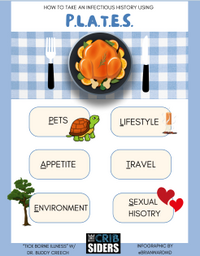
The image presents the P.L.A.T.E.S. mnemonic for taking an infectious history, with each letter linked to a key domain: Pets, Lifestyle, Appetite, Travel, Environment, and Sexual history. Each category is shown in its own labeled box with simple illustrations like a turtle, cigarette, tree, and hearts. A dinner-table theme frames the graphic, emphasizing P.L.A.T.E.S. as an easy way to remember core exposure questions.
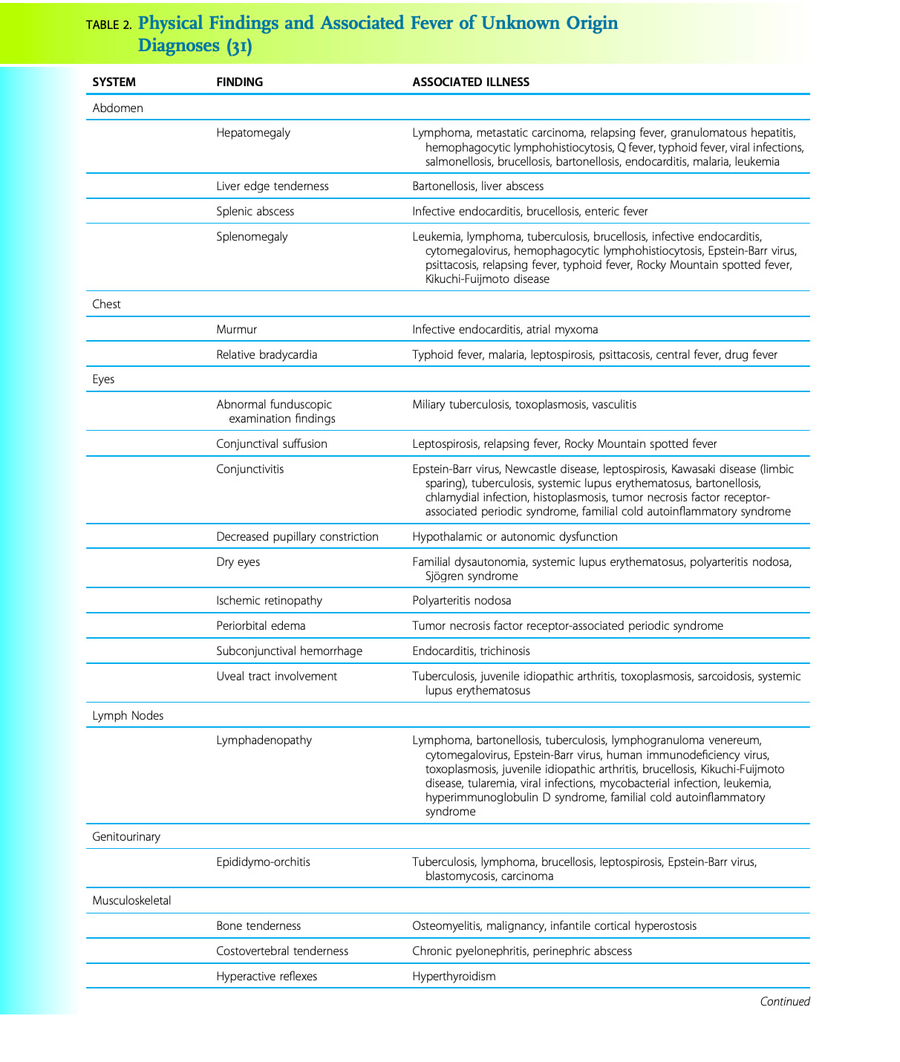
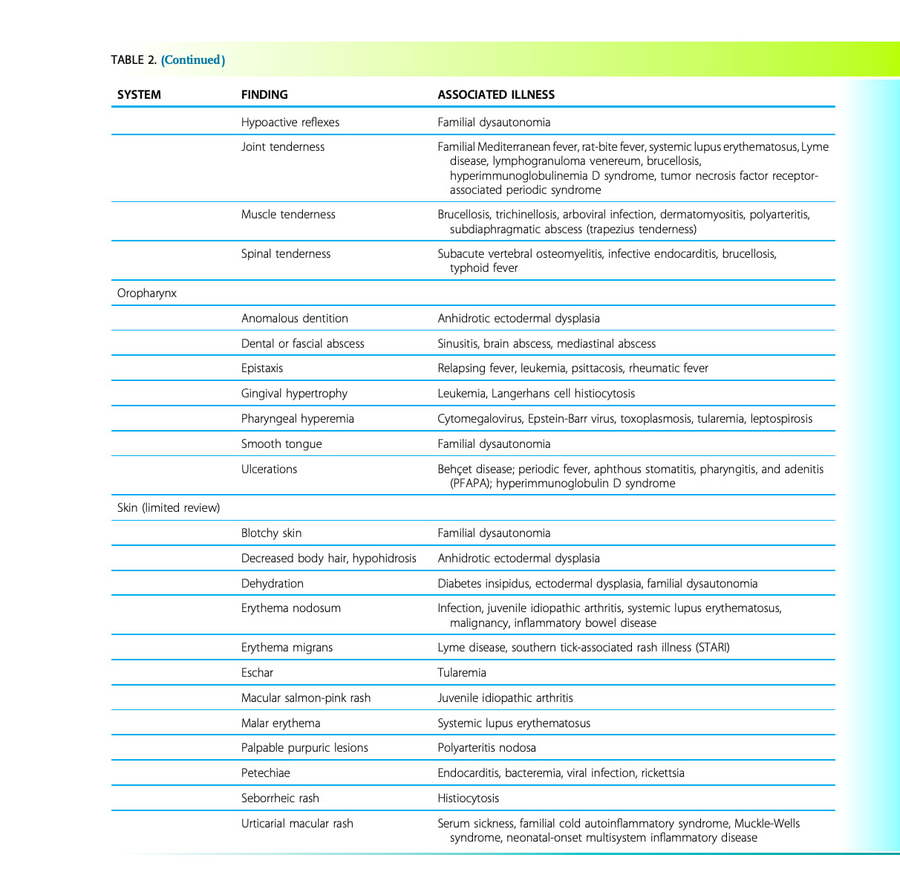
These tables match specific physical exam findings—from neurologic reflexes to oropharyngeal changes, skin findings, abdominal tenderness, cardiac signs, ocular abnormalities, lymphadenopathy, and musculoskeletal symptoms—with potential underlying causes of pediatric fever of unknown origin. Each system lists multiple associated illnesses, including infections, autoimmune conditions, malignancies, endocrine disorders, and autoinflammatory syndromes. The layout emphasizes how targeted physical findings can help narrow a broad FUO differential.
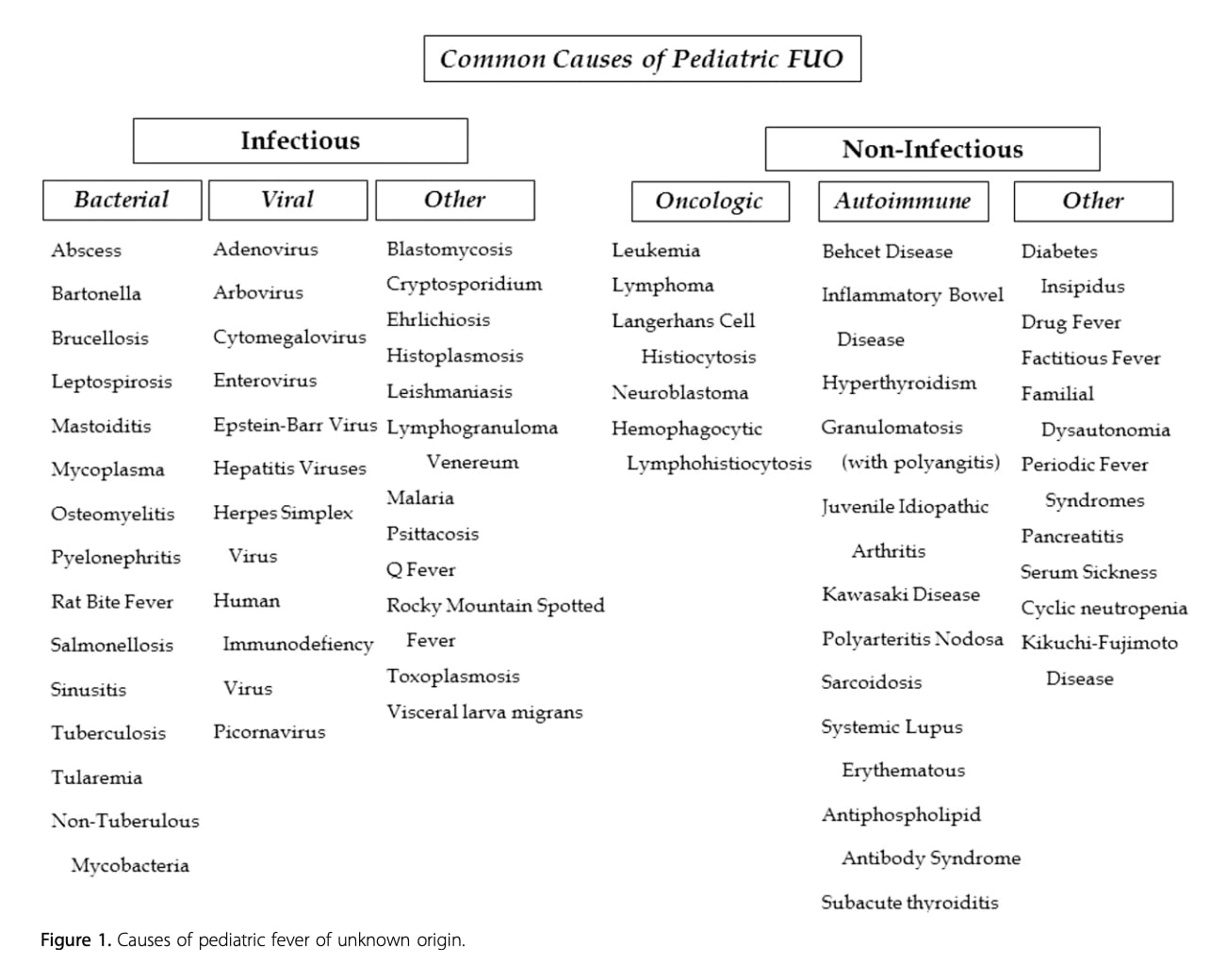
The chart organizes the differential diagnosis for pediatric fever of unknown origin into infectious causes (bacterial, viral, and other pathogens) and non-infectious causes, including oncologic, autoimmune, and miscellaneous conditions. Each category contains numerous examples such as abscess, EBV, histoplasmosis, leukemia, juvenile idiopathic arthritis, periodic fever syndromes, and endocrine or inflammatory disorders. The layout highlights the broad scope of conditions that can present with prolonged unexplained fever in children.