
NASA NeuroSTAR Study
Neurobehavioral changes following spaceflight stressors (NeuroSTAR)
Thank you for your interest in our study! Below, you will find background information on the research, what being a human research subject means, compensation, and how to reach out if you're interested in participating.
What is the purpose of this research?
This project is part of a joint collaboration sponsored by NASA in order to understand how to support astronauts on long-term spaceflight missions, including how they might respond to the effects of stressors and risks they may encounter on their mission to Mars.

What is Penn's role in this project?
The University of Pennsylvania will conduct the human research portion of this project in our state-of-the-art Chronobiology and Isolation Laboratory located in the Hospital of the University of Pennsylvania (HUP) in Philadelphia. The purpose of our in-lab study is to investigate the impairing effects of known central nervous system (CNS) stressors in a controlled environment in order to predict and mitigate analogous risks in spaceflight. This study has been approved by the University of Pennsylvania Institutional Review Board.
As a human research subject, you would report to our laboratory located in the Hospital of the University of Pennsylvania (3400 Spruce Street) on Sunday evening and continuously remain in the laboratory until Friday morning of the same week, for a total of 6 days and 5 nights. During the days, you will complete cognitive testing, surveys, and tasks to assess reaction time, balance and coordination. Over the course of the week, you will undergo a total of three MRIs (Magnetic Resonance Imaging) of the brain (MRI does not expose you to radiation) and six blood draws. You will wear a small heart monitor on your chest and a Garmin smartwatch monitor on your wrist.
As this study is designed to study impairment caused by stressors in order to understand how astronauts may respond to stressors in spaceflight, this protocol includes two well-known CNS stressors: alcohol consumption and sleep deprivation. These stressors are administered on separate days, so you will not undergo both conditions on the same day/night.
On one day, you will consume alcohol. We will administer a predetermined dose (in the form of vodka mixed with a choice of juice or caffeine-free soda) designed to get you to a blood alcohol content (BAC) of 0.08%. You will have approximately twenty minutes to consume the alcohol. After drinking, you will perform testing and have your BAC checked via breathalyzer throughout the day.
On another day, you will remain awake overnight until the opportunity for a nap the following early afternoon, and a recovery night of sleep.
What is staying in the lab like?
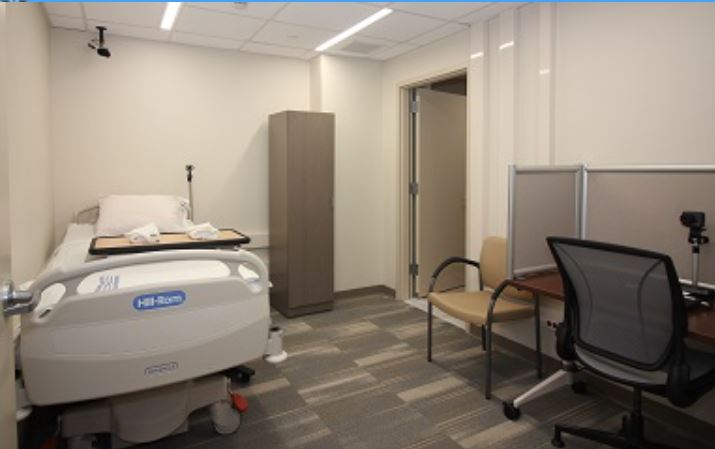
During the in-lab study, you will have your own private bedroom with ensuite bathroom. You will share the common areas of the laboratory with three other participants for the 6-day/5-night study (Sunday evening to Friday morning). You will live in the lab for the duration of the study and you will not have access to the internet, cell phones, computers or other personal electronics outside of brief, dedicated periods, but you can be reached for emergencies at any time. All meals and snacks are provided, but you are not permitted to consume caffeine during the in-lab study.
Trained staff is present at all times to administer the tests and to assist you with any concerns.
How do I know if I'm eligible?
If you are between 21-60 years old (with no sleep disorders, a non-smoker, and willing to consume alcohol), please contact us to learn more about the details of the study and to schedule a phone interview to see if you meet the eligibility criteria to participate in the in-lab study.
If you are interested and eligible, we will schedule two screening sessions at University of Pennsylvania prior to the start of the in-lab study. Screening visits are paid and transportation costs are reimbursed. After screening and before the start of the in-lab study, we will ask you to complete a brief daily survey about the duration and quality of your sleep at home, and you will be assigned an activity-monitoring device to be worn daily on your wrist (Garmin vívoactive 6).

Yes, subjects are compensated up to $1,303.00 paid via a Greenphire ClinCard (a physical reloadable debit card), plus reimbursement for transportation costs.
I'm interested in participating! What do I do next?
Call 215-573-5855 (mention NeuroSTAR Study) or email UEPstudy@pennmedicine.upenn.edu.
Staff will provide information on the study and answer any questions you have.
Back to Top